
For years, the global music industry has been framed as a battle between creativity and technology. Today, with the rise of AI, that narrative has returned—louder than ever.
But the real issue is not AI. The real issue is power, structure, and collaboration.
This is not a story about machines replacing musicians. It is a story about how music has been organised, controlled, and valued—and how that structure is now being challenged.
How the Music Industry Was Really Built
Modern music did not grow solely as a creative ecosystem. It evolved as a commercial system, shaped by three dominant forces:
● Control over distribution
● Control over promotion and marketing
● Control over market access
Those who controlled these elements decided:
● Who was heard
● Who became popular
● How fees and royalties were structured
● Who could sustainably survive in the industry
Over time, major labels and publishers formed powerful ecosystems of their own. Popularity often became a function of budget rather than artistic merit. This did not happen overnight. It was a structural outcome.
An Uneven Playing Field
Song creators—composers and lyricists—have historically operated on an uneven field. Not because of a lack of talent, but because of imbalanced negotiating power. In Malaysia, for example:
● Thousands of registered composers collectively hold limited voting power
● While a relatively small number of publishing entities command millions of votes
This is not a creativity problem. It is a legacy governance problem.
Fragmented Governance, No Unified Vision
Music has never been completely ignored by governments. It is often scattered across ministries and agencies:
● Culture and heritage
● Communications and media
● Copyright and intellectual property
But fragmentation creates blind spots. Modern genres—rock, metal, R&B, hip-hop, punk, experimental music—often fall into grey areas. They are neither fully treated as cultural heritage nor fully developed as strategic industries.
To this day:
● There is no comprehensive national database of songwriters, performers, poets, or creators
● No single authority responsible for holistic music industry development
● No long-term framework that treats music as a strategic economic sector
When governance is fragmented, power naturally shifts to the market—and markets reward capital, not fairness.
Then Came AI
AI did not arrive quietly. But it also did not arrive as a threat. AI fundamentally changed who can create music and who can own recording rights.
For the first time:
● Songs can be created anytime, anywhere
● Works can be fully AI-generated or hybrid (human + AI)
● Recording ownership can remain with the song creator
The result is an explosion of creativity:
● Massive volumes of new music
● Genre experimentation without gatekeepers
● Ideas that previously had no space now have an audience
Trends are no longer fully controlled by marketing budgets or promotional machines. And this distinction matters:
- ● AI did not disrupt the music industry.
- ● AI expanded the creative economy.
What AI Really Exposed?
AI did not break the system. It exposed its weaknesses. Legacy structures were built for scarcity—limited studios, limited distribution, limited access.
AI operates in abundance. When abundance meets old systems designed for control, tension is inevitable. That tension is often mislabelled as “AI anxiety".
”In reality, it is a power shift.
From Forcing Compliance to Owning Influence
In the streaming era, major labels learned how to pressure platforms into compliance—through catalog leverage, licensing terms, and market dominance.
With AI music platforms, direct pressure is harder. So the strategy evolves.
Control shifts from Forcing platforms to comply to Owning influence through partnerships, investments, and takeovers.
The form changes. The intent often remains the same: to define the terms. If song creators remain fragmented, history will repeat itself.
The Real Question: How Do AI Music Creators Collaborate?
The future of music is not human versus AI. It is not creator versus platform. The real question is:
How do song creators collaborate, share value, and amplify their collective voice in an AI-driven world? Technology alone is not the answer. Ecosystem is.
Why AIMXCHANGE Exists
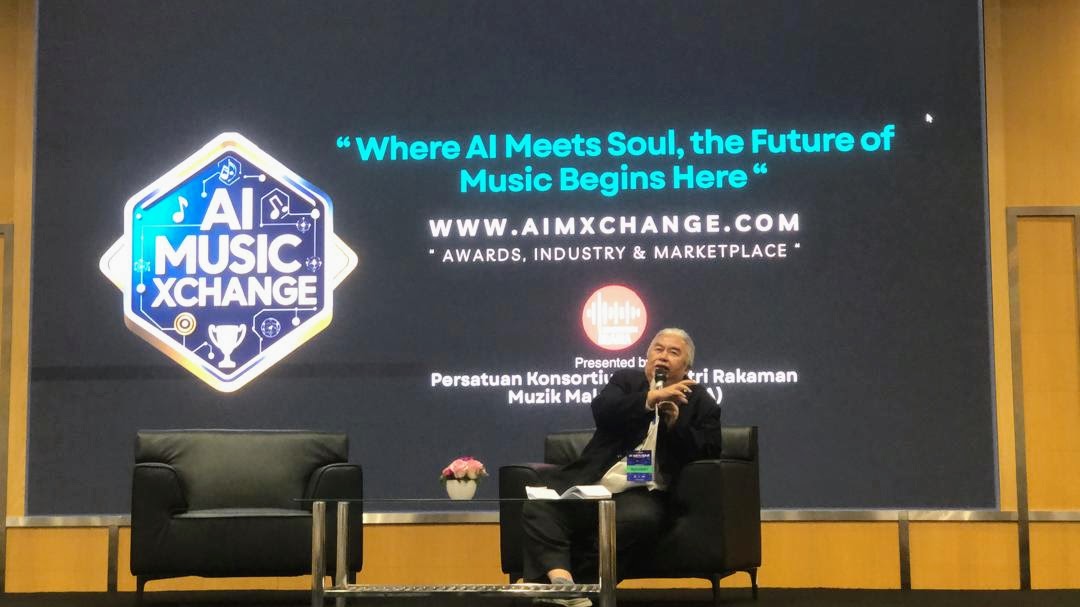
This is where AIMXCHANGE comes in. AIMXCHANGE was not built to fight the industry. It was built to prepare creators before the terms are locked in. It is not just another upload platform.
It is:
- ● A collaborative space for AI-native and hybrid song creators
- ● A community-driven ecosystem before corporate dominance defines the rules
- ● A platform designed to amplify creators beyond algorithms
Redefining Music Collaboration
AIMXCHANGE represents a shift:
- ● From competition → collaboration
- ● From algorithm dependency → community amplification
- ● From isolated creators → collective voice
Because in every major industry transition, one truth remains:
"If creators do not organise early, someone else will organise the industry for them."
Final Thought
This is not about AI. It is about:
- ● Who gets to create
- ● And who defines the future of music
- ● How value is shared
AIMXCHANGE is not the final answer. But it is a first step—towards a more collaborative, inclusive, and creator-centered music ecosystem.
Haji Rozman Abas delivered this paper at BUDAYAVERSE2025 on December 27, 2025.
#FutureOfMusic #MusicIndustry #AIMusic #CreativeEconomy #MusicCreators
#AIMXCHANGE #BudayaVerse2025